
The current Iranian campaign against the U.S.-Israeli axis is no longer merely a regional round of hostilities; it represents a decisive strategic test for the clerical regime in Tehran, according to senior Israeli political sources.
They note that, from the opening days of the campaign, it was evident that Iran had committed immediate mistakes as well as several accumulated errors over recent years, missteps in deterrence, regional management, and the assessment of the shifting international reality.
Iran failed to draw the necessary lessons from the military Operation against it last June, as well as from Israel’s preemptive “Decapitation” operation, which targeted and eliminated the leadership of the Islamic Revolutionary Guard Corps and key nuclear scientists.
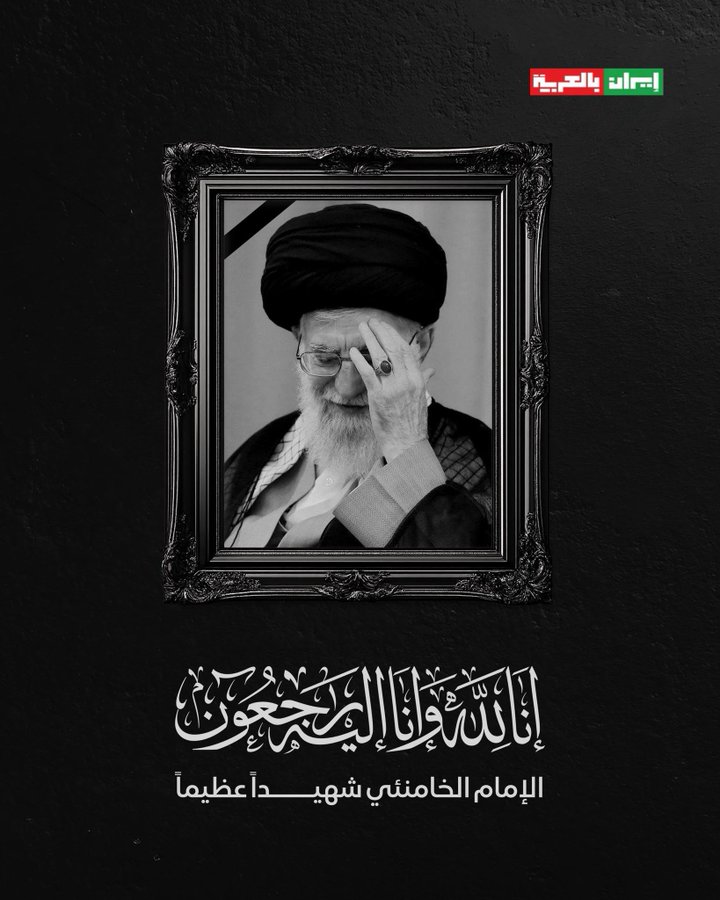
Although Iran could have reasonably anticipated that Israel would attempt to assassinate Supreme Leader Ali Khamenei, it did not sufficiently strengthen the protection of its senior leadership or its decision-making centers. The very possibility of repeated strikes following similar patterns indicates a profound intelligence and systemic failure.
In a broader context, Iran’s delays in completing its military nuclear program and producing a first nuclear bomb in recent months have undermined its ability to establish effective deterrence vis-à-vis the United States and Israel.
Some analysts argue that merely possessing weapons of mass destruction could have enhanced Iran’s deterrent capabilities, drawing parallels to Saddam Hussein’s Iraq prior to the 2003 U.S. invasion.
According to senior security sources, Iran mismanaged its negotiations with the United States and failed to accurately gauge the seriousness of President Trump and Prime Minister Netanyahu’s intentions.
It had no intelligence on the close coordination between the two leaders or the military preparations for a surprise attack and preemptive aerial strike against the Iranian leadership.
A senior security official notes that Iranian Foreign Minister Abbas Araghchi approached negotiations with Steve Whitlock and Jared Kushner arrogantly, and Whitlock later recounted in a television interview that the Iranian team boasted about amassing enriched uranium sufficient to produce eleven nuclear bombs in a short period.
Over the years, Iran compounded its miscalculations with additional errors:
- Regional Expansion Policy Creating a Counter-Bloc
Over the past two decades, Iran sought to expand its influence in the Arab world through alliances, proxies, and political-military influence mechanisms.
However, many regional states perceived this as an attempt to dominate, propagate Shia Islam, and destabilize their countries. This perception gradually led to the formation of a Sunni political-religious bloc opposed to Iran. Iran’s proxies, intended to provide protection by supplying weapons, failed to fulfill their role, placing the burden on Iranian forces themselves. Instead of conducting warfare on foreign territories where proxies operate, such as Lebanon, Syria, or Iraq, the conflict eventually struck Iranian soil, causing complete destruction of military infrastructure and nuclear facilities.
2. Expansion of the Current Theater to the Gulf States
By including the Gulf countries in the circle of threats and directly targeting them with ballistic missiles and drones, Iran not only expanded the battlefield but also created long-term strategic consequences. This approach has increased Iran’s isolation, and economically and politically significant states could quickly become overtly hostile fronts. Iran has also lost a portion of its public support in the Arab street, especially after the confrontation extended beyond a direct conflict with Israel.
3. Misreading Israel’s Strategic Shift After October 7
The Hamas attack on the Gaza envelope on October 7, 2023, and Israel’s subsequent response created a new regional reality. Israel expanded the conflict, acted decisively, and altered its operational patterns. Conversely, Iran did not adjust its strategy to these changes, continuing to operate under outdated rules. A failure to assess the shift in Israel’s security perception, coupled with a misreading of the U.S. political system and its pressures, contributed to further deterioration. A better understanding of Washington’s dynamics could have enabled Iran to pursue a diplomatic maneuver to prevent the attack, according to senior security sources.
4. Erosion of Iran’s Position and Image
The latest campaign exposed the gap between Iran’s cultivated image as a strong, united, and resilient regional power and the reality on the ground. The weakening of its allies in Gaza, Lebanon, Iraq, and Yemen, the fall of Bashar al-Assad’s regime, growing internal criticism within Iran, and direct strikes on senior clerical leadership all undermined the narrative of invulnerability and strength that Iran sought to project. The crisis is thus not only military but also perceptual; in the Middle East, where image carries strategic significance, the collapse of a myth can be as impactful as damage to military infrastructure.
Conclusion
If the current Iranian regime survives the war, it will face deep introspection and the need for fundamental changes in its approach to deterrence, alliance management, and strategic reading of the regional environment.
However, senior Israeli security officials assess that it may already be too late for such reforms and that the regime’s fate is likely sealed.