Israel and Turkey Compete for Regional Hegemony
The strategic center of gravity in the Middle East is gradually shifting from the confrontation with Iran to the struggle over the regional balance of power between Israel and Turkey.

The strategic center of gravity in the Middle East is gradually shifting from the confrontation with Iran to the struggle over the regional balance of power between Israel and Turkey.

The strategic center of gravity in the Middle East is gradually shifting from the confrontation with Iran to the struggle over the regional balance of power between Israel and Turkey.

Fatah’s eighth conference exposed the depth of the movement’s internal divisions and its growing detachment from the Palestinian public in the Gaza Strip.

The results of Fatah’s 8th General Conference have intensified the succession struggle expected to erupt once PA President Mahmoud Abbas leaves the political stage, while

While the confrontation with Iran and developments along the northern front occupy both Israel and the United States, Hamas is exploiting the diplomatic stalemate to delay demands for its disarmament.
At the same time, it is working to consolidate its governance in the Gaza Strip, rebuild its military capabilities, and continue terrorist activity against IDF forces, with the aim of preserving its position ahead of the next phase of the regional conflict.

The Lebanon Model in Gaza
Hamas is working to remain the dominant military force in the Gaza Strip behind the scenes, alongside a formal civilian administration, in order to ensure full control for years to come.

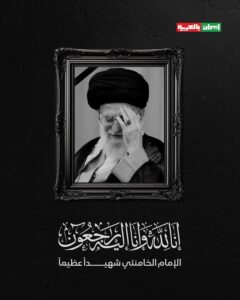
For decades, Ali Khamenei transformed Iran into a regional power built upon three strategic pillars: its nuclear program, its ballistic missile arsenal, and an extensive network of proxy organizations across the Middle East. Yet the very security doctrine he spent decades constructing ultimately revealed its own limitations and culminated in the war that ended with his death.

The framework agreement undermines Iran’s “Unity of the Fronts” doctrine and strengthens the sovereignty of the Lebanese government.
Its success, however, will ultimately depend on whether the Lebanese Armed Forces are willing, for the first time, to confront Hezbollah and enforce the commitments undertaken by Beirut.

Israeli officials believe that Tehran is using Hezbollah as a tool to undermine relations between President Donald Trump and Prime Minister Benjamin Netanyahu, while simultaneously attempting to impose its doctrine of “the unity of arenas” on Washington through pressure in Lebanon and threats to international maritime routes.

Iran’s leadership is seeking to recover economically and militarily through the Memorandum of Understanding with the United States, while avoiding any relinquishment of its long-term strategic assets.

Israeli defense officials assess that Hezbollah’s intensified use of explosive drones and coordinated UAV swarms is intended to wear down IDF combat forces and undermine the sense of security in northern Israel.
At the same time, the Israeli military is struggling to contain the expansion of Hezbollah’s explosive drone capabilities, as the organization increases pressure on the newly established buffer zone in southern Lebanon.

The elimination of Hezbollah’s Chief of Staff sends a clear message to Beirut: Israel will no longer tolerate the organization’s military buildup under Iran’s patronage.
The deep strike in the heart of the Dahia marks a shift in the rules of the game, signaling to the Lebanese government that the time left to dismantle Hezbollah is rapidly running out.

The cease-fire agreement with Lebanon presents Israel with significant intelligence and operational challenges to prevent Hezbollah’s military recovery and reestablishment in southern Lebanon.

According to senior security officials, Sheikh Naim Kassem, the new Secretary General of Hezbollah, is in Israel’s crosshairs and it will work to eliminate him.
In their estimation, his appointment was made under Iranian pressure on the Hezbollah leadership to show that the organization recovers and controls the situation after the severe blows it received from Israel.

Senior Israeli security officials are voicing concern over Syrian President Ahmad al-Sharaa’s ability to eradicate the ISIS terrorist organization in Syria.
According to them, ISIS has become an indicator of a prolonged governance vacuum in the country, one that could quickly spill over to the Golan Heights and endanger Israeli communities.

Senior security sources report that various terrorist organizations are establishing a presence in southern Syria and planning attacks against Israel.
Israel has reportedly warned President Ahmad al-Sharaa that if he does not act to prevent terrorist activities targeting Israel, it will take full military action itself.

Senior security officials in Israel state that Abu Mohammad al-Joulani bears direct responsibility for the massacre of members of the Alawite sect and that he could have prevented it.
Al-Joulani has also found himself in trouble with the international community, but it is far from certain that he will punish those responsible for the massacre. He may attempt to stall the investigation.

The new ruler of Syria, Abu Muhammad al-Jolani, is careful not to confront Israel. Despite the IDF’s activities in the Golan Heights and bombings in Syria, his focus remains on achieving stability for his rule and securing international recognition.
Currently, Israel follows a policy of “respecting and suspecting him,” and so far, it has not established open or secret communication channels with Abu Muhammad al-Jolani.

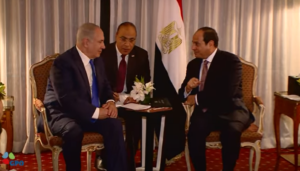
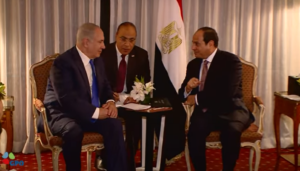
Israel’s political leadership is deeply concerned about Egypt’s violations of the peace agreement in the Sinai Peninsula and intends to address the issue with the Trump administration.
Senior security officials warn that despite the peace treaty, Egypt has a vested interest in weakening Israel militarily and politically.
They argue that it is time to abandon the misconceptions that led to the intelligence failure on October 7, 2023.

The dispute between Israel and Egypt over the “Philadelphia Corridor” has led to heightened tensions between the two countries.Political officials in Jerusalem estimate that the peace agreement is not currently at risk, but the security establishment is concerned about Egypt’s military build-up and the system of tunnels and bridges it has constructed on the Suez Canal.
This infrastructure could allow Egypt to transfer large military forces to the Sinai Peninsula unexpectedly.

Despite the horrific murderous attack on Israel’s border with Egypt, there is no danger to the strategic relations between Israel and Egypt.
Israel sees the peace agreement with Egypt as an important pillar in its national security concept, the IDF and the Egyptian army will learn lessons and they are supposed to change the deployment of forces and security measures along the common border.

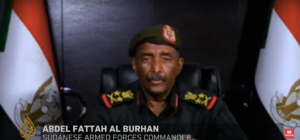
The internal crisis in Sudan continues, the military struggle between the heads of the military government is escalating and the war between them may also spread to neighboring countries on the border of Sudan.
Israel is concerned about the situation in Sudan and calls on both sides to reach reconciliation, the escalation of the crisis could severely damage the normalization process that has begun between Israel and Sudan on the way to a peace agreement between them.

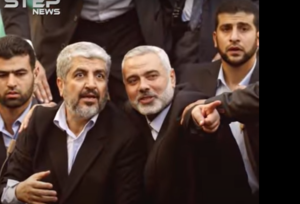
The intelligence agencies of Lebanon, Qatar, and Turkey have implemented stringent security measures to protect individuals associated with the Hamas movement. There is growing concern that the Israeli Mossad might attempt assassinations, prompting a need for heightened security.

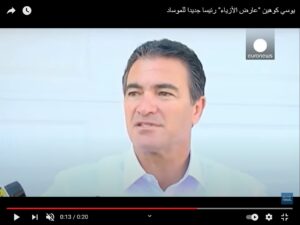
The handling of the issue of the release of the hostages held by Hamas is scandalous, former head of the Mossad Yossi Cohen pushed himself into the issue and is conducting negotiations at the same time as the head of the Mossad David Barnea who was officially appointed to the task .
According to political sources, Yossi Cohen started his campaign for Prime Minister with the assumption that at the end of the war Netanyahu would step down from the political stage.

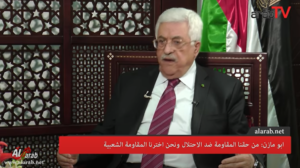
The Palestinian political system began to engage in soul-searching regarding the fate of the PA and its future in Judea and Samaria.
The current Israeli government does not want the PA to collapse, it wants it to continue managing the day-to-day lives of the Palestinians in Judea and Samaria and be ready to resolutely fight terrorism.

The killing of the head of Hamas’s military wing in Gaza is viewed in Israel as a significant intelligence and operational achievement. However, assessments indicate that Hamas will continue to reject disarmament demands and will move quickly to appoint a successor in order to project continuity and sustain the struggle against Israel.

For many years, Iran has helped Hamas and Islamic Jihad build a regular army and military outposts in the Gaza Strip to attack Israel.
The Biden administration is working to end the war before the task of completely destroying the military infrastructure that threatens Israel’s existence is completed. The political echelon must stick to this task.

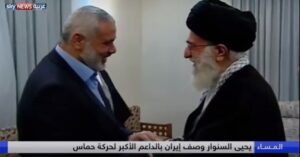
Yahya Sinwar’s efforts to stoke unrest in Judea, Samaria, and among Arab communities in Israel during the month of Ramadan ended in failure.
With hopes now pinned on support from Iran to bolster his rule in the Gaza Strip, Sinwar’s ambitions faced a setback as Israeli security forces maintained a delicate yet firm presence around the Temple Mount, preventing any potential escalation.

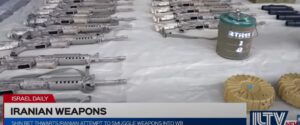
Senior security officials estimate that Iran will intensify the smuggling of weapons into northern Samaria in the near future, prompting armed terrorist groups to carry out attacks in retaliation for the assassination of Hassan Mahdavi.Iran’s intentions to flood Judea and Samaria with weapons have raised serious concerns within the Shin Bet, prompting the Prime Minister to announce plans for a new border fence with Jordan to prevent infiltrations and smuggling.