The current situation in Gaza reflects a consistent Hamas strategy that combines firm adherence to its political demands with ongoing military activity and force buildup on the ground.
According to senior security officials, the organization is operating under a strategic concept of waiting for developments in the regional arena, particularly the confrontation with Iran, while using the interim period to achieve economic recovery and restore its military strength.
According to these assessments, Hamas is preparing for the next military confrontation with Israel, based on the assumption that its refusal to disarm could ultimately lead to a U.S. “green light” for Israel to seize by force the territory it controls in Gaza, estimated at nearly 50 percent of the Strip.
Hamas is expected to prolong negotiations with the so-called “Peace Council,” adopting an Iranian-style approach of buying time and setting preconditions in order to undermine President Trump’s 20-point plan.
Despite mounting military and political pressure, the organization shows no willingness to disarm, viewing its weapons as a fundamental condition for its survival and for maintaining its political and military standing.
This position is reflected in its rejection of the plan presented by the Peace Council, which included disarmament as a prerequisite for progress in reconstruction and Israeli withdrawal.
The council’s High Commissioner, Nikolay Mladenov, emphasized that disarmament is the only path forward, but Hamas and other armed factions in Gaza sharply criticized and rejected the proposal.
At the same time, Hamas continues to set clear conditions for any future arrangement, foremost among them a full withdrawal of IDF forces from all areas of the Strip, particularly those defined as the “yellow line.”
From Hamas’s perspective, any continued Israeli presence constitutes a violation of Palestinian sovereignty and a direct threat to its ability to rebuild its strength.
Accordingly, Hamas leadership has made clear to mediators that it will not even consider disarmament without firm guarantees of a complete Israeli withdrawal.
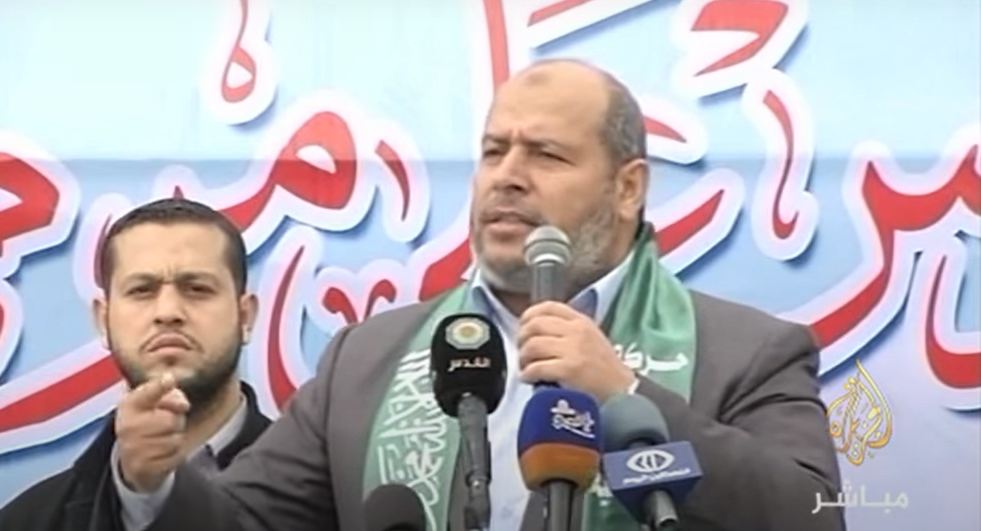
This stance was reiterated during a visit by a Hamas delegation led by Khalil al-Hayya to Cairo, which concluded on April 3, 2026, and included meetings with senior Egyptian officials and representatives of Palestinian factions.
According to Hamas-affiliated media, the delegation presented a series of demands and amendments, including an end to what it described as “Israeli violations,” full implementation of the ceasefire agreement, and clarifications regarding the expansion of Israeli-controlled areas.
The confrontation with Iran, along with disputes over the operation of a new technocratic committee tasked with governing Gaza, is delaying the implementation of the second phase of the ceasefire agreement, under which Hamas is expected to relinquish control and disarm.
Despite the stalemate, mediators continue efforts to persuade the organization to agree to demilitarization, but Hamas remains firm in its refusal and continues to wait for regional developments.
On the ground, according to security sources, Hamas is using the situation to tighten its control. Its security apparatus is acting forcefully against critics, alleged collaborators, and members of militias supported by Israel. The organization’s growing confidence is also reflected in the public presence of armed operatives from its military wing and security forces. Simultaneously, Hamas is strengthening civilian governance through widespread police deployment, strict market oversight, continued operation of government ministries, and distribution of aid to the population.
Israeli security officials note that Hamas is also exploiting the flow of humanitarian aid into Gaza to improve its financial position and tighten its grip on the population. It reportedly seizes aid supplies, sells them in local markets, and uses the proceeds to recruit new operatives and enhance its military capabilities.
Hamas continues its military buildup, including efforts to smuggle weapons, in part via Egypt, and to develop indigenous weapons systems that could pose an ongoing threat to IDF forces and Israel. These efforts also include accelerated recruitment and training of operatives, as well as the reconstruction of infrastructure damaged during the fighting.
Alongside these recovery and buildup efforts, Hamas has not abandoned armed resistance.
It continues to carry out attacks against IDF forces, including the use of explosives, anti-tank fire, and guerrilla warfare tactics, with the aim of eroding the Israeli presence and maintaining its image as an active fighting force.
Meanwhile, IDF forces continue to operate in the “yellow line” areas to locate militants, destroy weapons and terrorist infrastructure, and prevent attacks, including the targeted killing of operatives who violate the ceasefire.
In parallel, Hamas is continuing its information campaign, promoting narratives of humanitarian distress in local and international media, despite the large volume of goods entering the Strip.
Another indication of the organization’s connection to the regional arena is the postponement of its internal leadership elections until the end of the year, amid internal disagreements, including disputes over the appointment of figures associated with the pro-Iranian camp. The race for head of the political bureau pits Khaled Mashal, representing the global Muslim Brotherhood current, against Khalil al-Hayya, who is identified with Iran. This development reflects Tehran’s influence on decision-making within Hamas and the organization’s preference to wait for greater clarity in the regional situation.
According to security officials, as long as Israeli and American attention remains focused on the confrontation with Iran and the northern front with Hezbollah, Hamas will continue to consolidate itself as the dominant governing force in Gaza. This is despite Israeli strikes, international pressure, and internal criticism from the population over the rising cost of living and the collapse of services.
In conclusion, Hamas is currently pursuing a dual strategy: on the one hand, waiting for a decisive outcome in the regional arena, particularly regarding Iran; on the other hand, exploiting the time available to strengthen its military capabilities, reinforce its governance, and deepen its control on the ground. Even if it is eventually required to formally transfer authority to a civilian technocratic body, the organization aims to ensure that it remains a central and influential force in Gaza in the “day after.”
Senior security officials conclude that Israel is likely to face a significant political and security challenge after the end of the war with Iran, not only in Lebanon but also in the Gaza Strip. Hamas, like Hezbollah, is a complex jihadist organization that is difficult to dismantle. Disarming it will be extremely challenging, and Israel should expect a prolonged political and military struggle in Gaza, the arena from which the current war began on October 7, 2023.