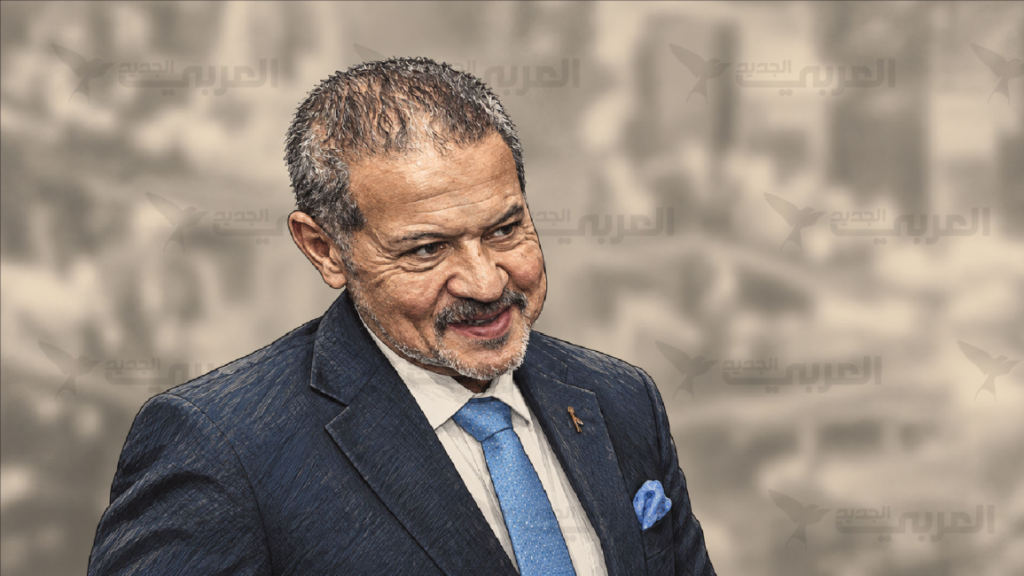
For years, Yasser Abbas was known primarily as Mahmoud Abbas’s wealthy son, a businessman who built his fortune outside the Palestinian political system. He was not a member of Fatah’s central institutions, held no official position in the PA, and was not regarded as one of the leading candidates to succeed his father.
This year, however, the situation changed. In May 2026, Yasser Abbas was elected to Fatah’s Central Committee, the movement’s most important political body.
The election was significant not only because it gave him an official position at the top of Fatah for the first time, but also because it took place at a time when the struggle over the shape of the post-Mahmoud Abbas era is intensifying, as the Palestinian president approaches the age of 91.
Senior Fatah officials say that his father, Mahmoud Abbas, actively promoted Yasser’s candidacy in the internal Fatah elections. They view this as a possible indication that a longer-term effort may be underway to build Yasser Abbas’s political standing and position him as his father’s successor.
According to these officials, election to the Central Committee does not, in itself, make Yasser Abbas his father’s successor. It does, however, place him for the first time inside the arena where the future succession struggle is likely to unfold.
This is an important development that is already generating considerable tension within the Fatah leadership.
Senior Fatah officials told me that since Yasser Abbas was elected to the Central Committee, tensions between him and the movement’s leadership have increased. Some within Fatah see him as an outsider who was parachuted into the leadership by his father, Mahmoud Abbas, in an attempt to prepare him as his successor, following a familiar tradition among Middle Eastern leaders of grooming their sons to inherit power.
The tension is particularly pronounced between Yasser Abbas and Hussein al-Sheikh, deputy chairman of the PA, who was originally designated to replace Mahmoud Abbas should he step down or become medically incapacitated, with the agreement of Israel, the United States, Egypt, Jordan and Saudi Arabia.
A senior Fatah official told me: “Yasser Abbas is like a thorn in Hussein al-Sheikh’s side. He suspects that Mahmoud Abbas placed his son in the Fatah leadership in order to push him aside as the designated successor.”
Others who are reportedly resentful of Yasser Abbas’s elevation to the Fatah leadership include Jibril Rajoub, secretary-general of Fatah; Mahmoud al-Aloul, a member of the Fatah Central Committee; Marwan Barghouti, a Central Committee member who is serving a prison sentence in Israel and who leads public opinion polls as a potential successor to Mahmoud Abbas; and Mohammed Dahlan, the former senior Fatah official who was expelled from the movement and later became a senior adviser to UAE President Mohammed bin Zayed.
Senior Israeli security officials assess that as long as PA President Mahmoud Abbas remains alive and in office, he will be able to strengthen his son’s position within the Fatah leadership. But if he dies or becomes medically incapacitated, the succession struggle is likely to intensify.
Fatah leaders are expected to oppose any attempt to transfer the presidency of the PA directly from Mahmoud Abbas to his son without a formal electoral process within Fatah institutions, where such a move would face substantial resistance.
For now, Yasser Abbas is trying to strengthen his position inside Fatah with his father’s backing. Sources within the movement told me that in recent months he has met with senior PA security officials, senior released prisoners and prominent figures within the PA, in an effort to build his own centers of influence within the Palestinian system.
According to these sources, such meetings do not make him a senior official in the PA, but they indicate that he is beginning to establish relationships with its civilian and security power centers.
Yasser Abbas has not been completely detached from the Palestinian political system in the past either. He occasionally participated in diplomatic meetings alongside his father, and in recent years there have been reports of his involvement in sensitive contacts.
In September 2023, according to Fatah sources, he was involved in discussions with Saudi Arabia concerning the possibility of Saudi-Israeli normalization.
In 2025, Palestinian media reported that he served as his father’s representative in contacts with the Lebanese government regarding the transfer of heavy weapons held in Palestinian refugee camps to the Lebanese army.
These were not formal leadership positions, but they point to an effort to acquire diplomatic experience and establish relationships with regional centers of power.
Senior security officials say that Yasser Abbas’s entry into the Palestinian political system is taking place along two parallel tracks.
The first is internal. His election to the Fatah Central Committee gives him a foothold inside the power center from which much of the struggle over the future leadership of Fatah and the PA is likely to emerge once Mahmoud Abbas leaves the political stage.
The second is external. This involves his relationships with Arab and international actors and his ability to present himself as a Palestinian figure capable of maintaining relations with governments and institutions outside the Palestinian Authority.
On September 7, 2026, the Presidency of the Socialist International appointed Yasser Abbas as a vice president of the organization representing the Middle East and Mediterranean region.
For Yasser Abbas, this represents an important addition to his political résumé: membership in Fatah’s Central Committee on the one hand, and a position in an international political organization on the other.
Mahmoud Abbas Still Holds the Keys
None of this means that Yasser Abbas is his father’s successor as chairman of the PA.
Senior Fatah officials say Mahmoud Abbas still controls the system, while the real succession struggle is taking place among several centers of power, including Hussein al-Sheikh, Jibril Rajoub, Mahmoud al-Aloul, Majed Faraj and other senior figures.
Each of them has his own political or security infrastructure. Each also has an armed militia loyal to him, which is currently operating behind the scenes with a low profile and could be mobilized if necessary once Mahmoud Abbas leaves the political stage.
The question, therefore, is not simply whether Mahmoud Abbas wants to promote his son. The more important question is whether he can build a power base for Yasser Abbas that will survive even after Mahmoud Abbas himself is no longer at the top of the Palestinian political system.
This is Yasser Abbas’s Achilles’ heel, according to a senior security official, particularly because he does not enjoy Israeli support. Israel, at present, would prefer to see Hussein al-Sheikh succeed Mahmoud Abbas. According to the official, al-Sheikh has close ties with the Shin Bet and with the Coordinator of Government Activities in the Territories, and he has been extremely cautious in his dealings with Israel.
Yasser Abbas can receive positions, win seats in Fatah institutions and build international relationships, the senior security official said, but he still has to prove that he can establish legitimacy of his own, rather than one based solely on his family name.
Neither the Israeli security establishment nor the CIA knows him well, and Mahmoud Abbas will not be able to simply parachute his son into the presidency without the consent of Israel and the United States, particularly in the face of strong opposition within the Fatah leadership.
Could Gaza Become Yasser Abbas’s Launching Pad?
Fatah sources say that if Yasser Abbas wants to transform himself from the president’s son into a political candidate with an independent power base, he needs a national project that would allow him to escape the image of a wealthy businessman close to the ruling family.
In their view, the Gaza Strip could provide him with precisely such an opportunity.
Gaza requires reconstruction on an enormous scale. It will require international, Arab and Palestinian investment, new infrastructure, the rebuilding of neighborhoods, water and electricity systems, hospitals, public institutions and mechanisms of governance.
Yasser Abbas ostensibly has the business background and connections required to become involved in such an effort.
If he chooses to do so, he could attempt to turn his wealth and connections into a political asset. Instead of being portrayed as the president’s son who receives positions because of his father, he could try to build an image as a Palestinian businessman who brings resources and investment to the reconstruction of Gaza.
Politically, that would represent a dramatic transformation. However, according to senior Fatah officials, the task would be extremely difficult for two reasons.
First, Israel opposes PA control over the Gaza Strip. Second, Mohammed Dahlan, regarded as the most senior Fatah figure in Gaza, has extensive connections with Hamas and is currently aligned with it in a political alliance ahead of elections to the Palestinian Legislative Council. Dahlan, they say, would not allow Yasser Abbas to establish any foothold in Gaza and would work to thwart him at every turn.
Within Fatah’s leadership, criticism of Yasser Abbas is already growing. Critics argue that his advancement to the Central Committee is a result of his father’s influence and that it deepens the public’s sense of alienation from a leadership already perceived as detached from the population and resistant to renewal.
Security officials say Yasser Abbas is already caught in a political trap. The more he advances politically with the help of his father, the stronger his position may become within the official Palestinian establishment, but the greater the risk that he will lose public legitimacy.
According to these officials, the more he attempts to build an independent political power base, the more likely he is to come into conflict with the centers of power within Fatah that are already preparing for the post-Mahmoud Abbas era.
Nevertheless, they believe Mahmoud Abbas is unlikely to give up. Despite his advanced age, approaching 91, he reportedly believes he can remain in office for several more years and, in the meantime, promote his son Yasser and strengthen his position within Fatah and the PA itself.
Time will tell.