
The protest movement in Iran has been steadily expanding against the backdrop of a worsening economic crisis, a sharp depreciation of the national currency, and an escalation in external security threats from Washington and Jerusalem.
What began as localized demonstrations in Tehran’s commercial bazaars has, within days, evolved into a broader wave of unrest encompassing universities, major cities, and peripheral regions alike.
This is unfolding amid public warnings about a possible Israeli or American military strike on strategic targets in Iran, including ballistic missile production facilities and new nuclear sites.
In recent days, demonstrations led by merchants and shop owners have taken place in Tehran in protest of the historic plunge in the value of the Iranian rial against the US dollar. Videos circulated on social media show security forces using tear gas to disperse protesters chanting slogans against the regime.
At the same time, protests have spread to universities. Iranian media reported student demonstrations at several academic institutions in Tehran and Isfahan, alongside protest gatherings in Kermanshah, Shiraz, Yazd, Hamedan, and Arak. In Mashhad, a noticeable increase in security presence was recorded, reflecting the authorities’ concern over further escalation.
The government in Tehran is attempting to project a message of restraint and calm. President Masoud Pezeshkian announced that he had instructed the interior minister to listen to the protesters’ “legitimate demands” and called for managing the crisis through dialogue. Other senior officials, however, have adopted a far more hardline tone.
Parliament Speaker Mohammad Bagher Ghalibaf warned against attempts to “exploit the protests,” hinting at hostile external actors. Judiciary Chief Gholam Hossein Mohseni Ejei also issued stern warnings to what he described as “currency market speculators,” stressing that the state would act against them decisively and within the framework of the law.
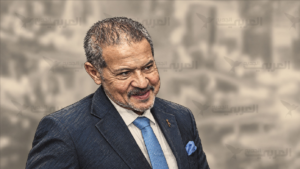
Against this backdrop, reports emerged that Central Bank Governor Mohammad Reza Farzin had submitted his resignation and that former economy minister Abdolnasser Hemmati was appointed in his place.
The move underscores instability at the top of Iran’s economic leadership and reflects an effort to contain public anger through personnel changes.
According to Fatemeh Maqsoudi, spokesperson for parliament’s economic committee, market volatility is not purely an economic phenomenon but is deeply influenced by the political atmosphere and the discourse surrounding the possibility of war. “It’s enough for Trump to say to Netanyahu, ‘Let’s have a cup of coffee,’ for currency rates to spike suddenly,” she said in an interview with the IRNA news agency.
Senior Israeli security officials assess that the external threat posed by Israel and the United States amplifies internal pressure on the Islamic Republic.
The economic protests are unfolding alongside a sharp escalation in security rhetoric. President Pezeshkian warned that Iran’s response to any attack would be “harsh and deterrent,” directly responding to threats by US President Donald Trump, who stated that Washington could support “another major blow” against Iran should it resume developing ballistic missile programs or nuclear weapons.
Israeli Prime Minister Benjamin Netanyahu addressed the possibility of an Israeli strike on Iran in an interview with Fox News on December 30, saying: “Iran is conducting tests to launch missiles at Israel. I hope they don’t make that mistake. We are not seeking escalation, and I hope they aren’t either.”
On the Iranian side, other senior figures have issued similarly forceful warnings. Ali Shamkhani, an adviser to Supreme Leader Ali Khamenei, declared that any act of aggression would be met with a “severe response,” emphasizing that Iran’s missile and defensive capabilities are non-negotiable.
By contrast, Foreign Minister Abbas Araghchi has sought to leave the door open to diplomacy. In an article published in The Guardian on December 29, he argued that renewing nuclear negotiations is the best available option and urged Trump to disregard Israeli warnings. According to Araghchi, Tehran is open to negotiations so long as they do not amount to capitulation, and the lifting of sanctions would have to be a central component of any political process.
Thus, while Iran’s streets and campuses continue to simmer, the leadership of the Islamic Republic finds itself trapped between mounting public anger, a deep economic crisis, and an external security threat, a volatile combination that presents the regime with one of its most complex challenges in years.
Nevertheless, senior security officials monitoring developments in Iran believe the regime remains far from collapse as a result of the current protest wave and is not under immediate threat in the near term.
According to their assessment, popular protest movements against authoritarian regimes typically take months to gain momentum and reach a critical mass capable of threatening the ruling system. Iran’s security forces, they note, remain loyal to the regime and have not joined the demonstrators.
The Iranian regime, these officials argue, is highly experienced in suppressing dissent through a wide range of methods and has previously weathered larger and more sustained waves of protest.
This is compounded by the absence of an organized opposition capable of replacing the regime, as well as the lack of visible fractures within the ruling elite from which a challenger, whether a political leader or a military figure, could emerge to overthrow Ali Khamenei. Most of the veteran senior leadership of the Islamic Revolutionary Guard Corps was eliminated by Israel last summer.
It is not inconceivable that Supreme Leader Khamenei will seek a scapegoat to appease public anger, possibly by dismissing President Pezeshkian or forcing his resignation and placing the blame for Iran’s economic mismanagement squarely on his shoulders.
As long as Ali Khamenei retains control over the security forces, it will be difficult for protesters to bring down the regime. For now, the Iranian leadership is containing the unrest, which has not yet spread across the entire country, and may seek to deflect public fury by blaming Israel and attempting to redirect it toward the United States and Europe.