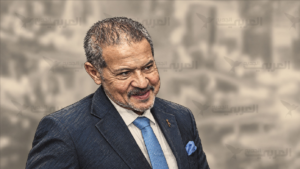

Senior security officials say that the outcome of Crown Prince Mohammed bin Salman’s visit to the White House indicates that he is not hasty to pursue a normalization agreement with Israel. According to their assessment, this stems from several factors:
- Lack of trust in the current Israeli government: There is concern that after signing a normalization agreement with Saudi Arabia, the Israeli government might take unilateral actions, annex parts of the West Bank, and expand settlements in ways that would hinder the establishment of a Palestinian state.
For this reason, the Crown Prince currently prefers to wait at least until after elections are held in Israel.
- Domestic and regional public opinion: Since the outbreak of the war in Gaza, the Saudi street has taken a more hardline stance and opposes normalization with Israel. Similarly, in other Arab countries, including those that have signed peace agreements with Israel such as Egypt and Jordan, there is significant resistance to Saudi Arabia joining the circle of normalization with Israel.
As the leader of the Sunni world, Saudi Arabia has spearheaded the Arab Peace Initiative since 2000, which conditions normalization with Israel on the establishment of a Palestinian state. Any compromise on this issue would damage Saudi Arabia’s regional standing, particularly while the conflict between Israel and its adversaries has not yet fully ended.
- Pressure from the Palestinian Authority: Riyadh is urged not to cooperate with the current Israeli government or normalize relations until Israel formally recognizes a Palestinian state and commits to its establishment.
Meanwhile, sources note that Mohammed bin Salman’s visit to the U.S. was personally successful. He managed to secure most of his requests through the substantial financial investments he is willing to make in U.S. deals, without compromising on normalization with Israel.
Senior political sources emphasize that Saudi Arabia is currently setting the rules.
President Trump, eager to channel significant investment into the American economy, must adapt to the new strategic reality and align with Saudi Arabia’s terms.
At the same time, Saudi Arabia maintains strategic relations with the U.S., China, and Russia, invests in technology and artificial intelligence, diversifies its economy, and cultivates a highly capable younger generation.
The message Mohammed bin Salman is sending to Washington is that strategic partnership is important but not guaranteed.
It must be a relationship of mutual interests, not a hierarchical one as in the past, where Riyadh was subordinate to Washington’s desires.
According to sources, President Trump has not yet finalized the F-35 fighter jet deal with Saudi Arabia despite expressing agreement, nor has he fully acceded to Saudi demands regarding nuclear matters.
He is keeping leverage to potentially advance a normalization agreement between Saudi Arabia and Israel.
Trump seeks a historic achievement, bringing about normalization between Israel and the leading Sunni power, Saudi Arabia.
From Riyadh’s perspective, however, it is not willing to pay the price without a genuine settlement ensuring the establishment of an independent Palestinian state.
Washington, for its part, recognizes that the Saudis are a central pillar of stability in the region.
Mohammed bin Salman is pursuing an active, independent, cross-bloc foreign policy.
Saudi Arabia is no longer merely reactive to crises but is a regional power shaping a new order. It skillfully navigates between great powers, leverages its position in the emerging energy economy, and sets terms even with Washington.
According to political analysts, Saudi Arabia is building its status as a rising power on the international stage, a state that is no longer merely influenced by the region but begins to influence it through diplomatic initiatives, shaping energy prices, massive investments, and launching broad regional processes across the Middle East.
Today, Saudi Arabia is strong enough to reject U.S. demands that do not align with its interests, and President Trump understands this.