
Lebanon has signaled that it is prepared to discuss issues beyond the implementation of the ceasefire, including potential economic cooperation.
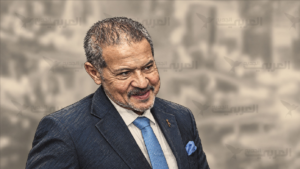
It has agreed to include civilians in the monitoring committee, appointing former ambassador to Washington, Simon Karam, as head of the Lebanese delegation, opposite Israel’s representative Dr. Uri Reznik, a senior official at Israel’s National Security Council.
However, according to senior Israeli security officials, these gestures do not indicate an intention to pursue normalization.
Rather, they appear to be aimed at improving the political atmosphere in hopes that Israel will postpone the military operation it is planning in Lebanon to weaken Hezbollah’s power.
On December 5, Hezbollah’s Deputy Secretary-General Sheikh Naim Qassem sharply criticized the appointment of a diplomat to head Lebanon’s delegation, calling it a “free concession.”
He described it as “another slip-up,” following what he termed the “August 5 mistake,” when the Lebanese government decided to dismantle the “resistance’s” weapons.
According to the same security officials, Lebanon is stuck between two unavoidable options, war or war, due to Hezbollah’s refusal to disarm.
The organization seeks to buy time, hoping for early elections in Israel and awaiting the U.S. midterm elections.
Meanwhile, Hezbollah is working to strengthen ties with Turkey and rebuild relations with Sunni-led Syria under interim president Ahmed al-Sharaa.
The major strategic error committed by Hezbollah, led by the late Hassan Nasrallah, was its decision after October 7, 2023, to turn Lebanon into a “support front” for Gaza.
This unnecessary gamble severely damaged the organization, advancing Iran’s agenda rather than Lebanon’s.
Hezbollah paid a steep price for the worn-out slogan of “unity of the fronts,” assuming Israel would abide by previous rules of engagement. Instead, Israel surprised Hezbollah, culminating in the physical elimination of Nasrallah himself.
Lebanon’s new president, General Joseph Aoun, whose election Hezbollah had blocked for a long time, now leads a government that adopted a new principle: “the state’s monopoly on weapons.”
The idea is that arms should remain only with the Lebanese Armed Forces, and all militias must disarm.
Hezbollah, backed by Iran, refuses to accept or implement this doctrine.
A year after the ceasefire with Israel was declared, Hezbollah continues to paralyze Lebanon, refusing to lay down its weapons.
The political structure built under Hezbollah’s dominance cannot be changed: the sectarian system remains untouched, and the mechanisms of corruption persist under the shadow of Hezbollah’s armed threat.
Key Obstacles to Normalization with Israel
According to senior Israeli security assessments, two central obstacles prevent Lebanon from moving toward normalization under the Trump peace framework:
- Lebanon is effectively held hostage by Hezbollah, which refuses to disarm and threatens civil war if the government attempts to dismantle it by force.
- Lebanon will not pursue normalization outside the Arab consensus, led by Saudi Arabia, which conditions normalization on the establishment of a Palestinian state.
Lebanon maintains that it will not enter any peace agreement or normalization with Israel except within a broad regional Arab framework.
Ultimately, despite Lebanon’s deep need for stability and its desire to halt cycles of conflict, it remains distant from normalization with Israel or joining the Abraham Accords in the foreseeable future.
The recent changes to the ceasefire monitoring committee, particularly the inclusion of civilians and discussions on economic cooperation, may mark a shift in Lebanon’s administrative approach. However, they do not constitute a change in strategic direction.
In the coming period, Lebanon will try to avoid sliding into a full-scale war.
It now faces increasing American and Israeli pressure to disarm Hezbollah.
With Trump’s return to the White House, Lebanon has lost much of its former room for maneuver. Ultimately, Hezbollah’s refusal to disarm continues to make gradual normalization with Israel nearly impossible.