
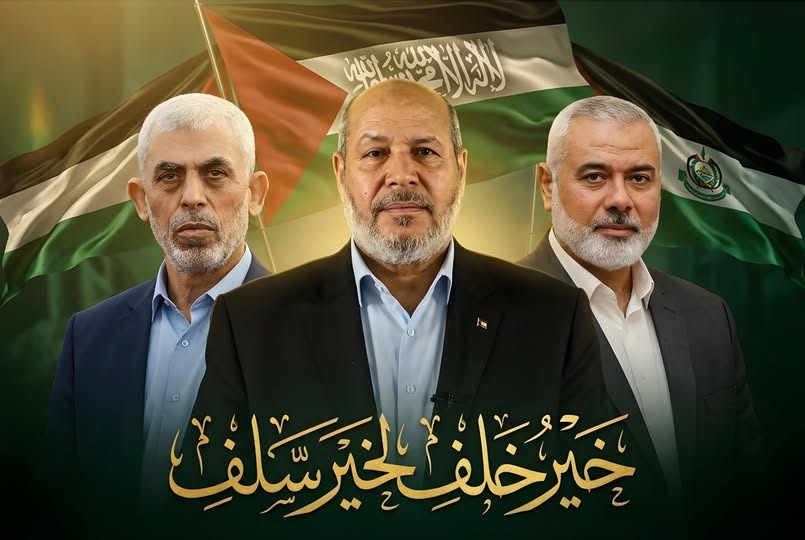
The London-based newspaper Asharq Al-Awsat reported on July 9, citing Hamas sources, that the movement’s activities in recent months,including its meetings, organizational operations, and public statements,indicate that Hamas has transferred a significant portion of its organizational center of gravity to Turkey. This marks a reversal after years in which the movement had reduced its activities there and deliberately kept a lower profile.
At the same time, Hamas issued statements condemning two terrorist attacks in Syria and expressing solidarity with the victims, a move widely interpreted as part of its effort to establish closer ties with the country’s new leadership under President Ahmad al-Sharaa.
According to the report, the clearest indication of Hamas’ growing reliance on Turkey was its decision to hold the movement’s internal elections for the head of its Political Bureau in Istanbul last May.
The vote ended without a decisive result, and a runoff between Khaled Mashaal and Khalil al-Hayya is expected to take place in the coming days.
Senior Hamas officials based abroad told Asharq Al-Awsat that the movement has resumed holding its leadership meetings in Turkey after several years during which such meetings,and even internal elections,were conducted in Doha, Qatar.
Over the past several years, Turkish security services have repeatedly announced the exposure of what they described as Israeli Mossad espionage networks operating inside Turkey.
Turkish media reported that part of these networks’ activities focused on monitoring Hamas operatives and the organization’s activities in the country.
For years, Israel has demanded that Turkey expel senior Hamas figures, including terrorists released in the 2011 Gilad Shalit prisoner exchange.
The most prominent among them was Saleh al-Arouri, deputy head of Hamas’ Political Bureau, who resided in Turkey between 2011 and 2015 before relocating to Beirut’s Dahiyeh district, where he was assassinated by Israel in January 2024.
According to the report, the most recent elections for the movement’s Political Bureau, which ended inconclusively, were held in Istanbul with the participation of members of both the Political Bureau and Hamas’ Shura Council.
A Rift with Qatar?
Hamas sources said that most of the organization’s senior leaders now spend extended periods in Turkey, including officials whose families continue to reside in Qatar.
All current meetings,whether concerning ceasefire negotiations or the movement’s internal affairs,are now taking place in Turkey.
Last September, Israel carried out an airstrike against a gathering of senior Hamas officials in Doha. While Hamas announced that its leaders had survived the attack, five of its operatives and a Qatari security officer were reportedly killed.
One senior Hamas official told the newspaper that “this is not the result of a crisis with Qatar. The move is intended to reduce the pressure on Doha stemming from American demands,driven by Israel,that Qatar expel Hamas’ leadership.”
Another Hamas source stressed that the movement continues to maintain strong and stable relations with the Qatari leadership, which continues to welcome senior Hamas officials.
According to Hamas officials, Turkey has become a safer destination following the Israeli strike against Hamas leaders in Doha.
“At least for now,” they argued, “Israel cannot strike targets in Turkey using its air force. Even if it attempts targeted assassinations through other means, its operational options are significantly more limited.”
They added that the continuing tensions between Iran and the United States have created a more vulnerable security environment in Qatar, one that Israel could potentially exploit to target Hamas leaders, as it has done in the past. Although Israel reportedly assured the administration of President Donald Trump that it would refrain from repeating such operations, Hamas officials say there is no guarantee that it will not do so again.
At the same time, Hamas is attempting to rebuild its relationship with Syria’s new leadership.
A senior Hamas official said that opening channels of communication with the new Syrian government, as well as with Arab, Islamic, and international actors, is a natural step for a national liberation movement seeking normal relations with all countries based on mutual respect, protection of mutual interests, and non-interference in internal affairs.
Istanbul Becomes Hamas’ Strategic Hub
Senior Israeli security officials say that the “Swords of Iron” war fundamentally transformed not only Hamas’ military capabilities inside Gaza but also the structure of its leadership.
While Israel succeeded in eliminating many commanders of Hamas’ military wing and severely damaging the organization’s command-and-control infrastructure inside the Strip, another, quieter but strategically significant process unfolded simultaneously: Hamas’ center of gravity gradually shifted outside Gaza, with Turkey emerging as its principal hub.
Whereas Hamas’ external leadership had previously been dispersed among several centers,including Damascus, Doha, and Beirut,since October 7, 2023, Istanbul has steadily become the organization’s most important operational center outside the battlefield.
It is no longer merely a refuge for senior Hamas officials. It has evolved into the location from which the movement conducts its foreign relations, strategic consultations, fundraising efforts, and contacts with regional actors.
According to Israeli security officials, Israel devoted unprecedented resources during the war to dismantling Hamas’ command structure. The systematic elimination of senior leaders and the sustained destruction of Hamas’ infrastructure inside Gaza severely weakened its internal leadership.
At the same time, however, the importance of Hamas’ external leadership increased dramatically, allowing the organization to continue functioning even as its command centers inside Gaza were devastated.
Why Turkey?
Turkey did not become Hamas’ primary external base by accident.
For years, Turkish President Recep Tayyip Erdoğan has consistently portrayed Hamas as a legitimate Palestinian resistance movement rather than a terrorist organization.
Even after the October 7 attack, Erdoğan refused to alter his position. Instead, he intensified his criticism of Israel, continued hosting Hamas delegations, and maintained close contacts with the movement’s leadership.
From Hamas’ perspective, Turkey provides a highly favorable political environment, enabling the organization to conduct diplomatic and organizational activities with minimal interference from the Turkish authorities.
According to numerous reports in the Arab media, senior members of Hamas’ external leadership,most notably Zaher Jabarin, deputy head of Hamas’ Political Bureau and the movement’s senior commander responsible for operations in Judea and Samaria,continue to operate from Turkey, managing a substantial portion of Hamas’ diplomatic and financial networks.
As pressure on Hamas increased in other countries, particularly Qatar, Istanbul’s importance as the venue for leadership meetings and strategic consultations has grown significantly.
A New Strategic Challenge for Israel and the West
Senior Israeli diplomatic officials argue that this development requires a fundamental reassessment.
Even if the Israel Defense Forces ultimately dismantle most of Hamas’ military infrastructure in Gaza, the organization will remain capable of functioning so long as its leadership enjoys a secure operational sanctuary abroad.
Hamas’ external leadership serves as far more than a diplomatic address. It is responsible for maintaining ties with Iran, Qatar, other regional actors, and the global Muslim Brotherhood network, securing financial resources, and directing the organization’s long-term strategic planning.
According to senior Israeli security officials, Hamas also maintains a substantial military-wing infrastructure in Istanbul, operated by terrorists released in the Gilad Shalit prisoner exchange.
This network is reportedly engaged in recruiting operatives and directing terrorist attacks inside Israel and throughout Judea and Samaria.
In addition, Hamas allegedly operates an extensive money-laundering network through Turkish currency exchange businesses, channeling funds to finance terrorist activities and strengthen its military capabilities.
According to Israeli diplomatic officials, the implications extend well beyond Israel.
Turkey is a NATO member with deep security, political, and economic ties to both the United States and Europe.
The continued presence and activity of Hamas’ senior leadership on Turkish soil places Western governments in an increasingly uncomfortable position: how can they demand Hamas’ dismantlement while simultaneously accepting that its external leadership operates from within the territory of a NATO ally?
Israeli security officials assess that the greatest challenge Israel may face after the war will not necessarily be Hamas’ military recovery inside Gaza, but rather its ability to preserve an effective leadership abroad.
Experience has shown that terrorist organizations do not need territorial control in order to survive.
Effective leadership, reliable financial networks, international connections, and a secure operating environment may be sufficient to ensure their long-term resilience.
As one senior Israeli diplomatic official put it, the campaign against Hamas does not end at the borders of the Gaza Strip.
It now extends to Istanbul.
As long as Turkey continues to serve as the principal center of Hamas’ external leadership, the organization may struggle to rebuild its military capabilities rapidly, but it will retain its organizational cohesion, diplomatic reach, and strategic capacity.
For Israel and the West alike, this should become one of the defining strategic issues of the post-war era.


