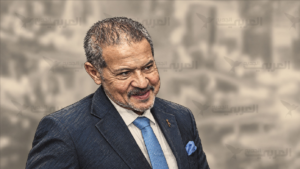

Senior security officials say Israeli intelligence agencies have completed assembling a comprehensive picture regarding the question of who truly governs Iran. It now appears that Mojtaba Khamenei remains in hiding at a location known to only a select few, out of fear he could be targeted by Israel.
Despite having been seriously wounded, his cognitive abilities remain intact, and he continues to receive regular updates on developments.
However, the killing of his father, Ali Khamenei, the former Supreme Leader, on the first day of the war, together with senior regime figures, has led to a profound transformation in Iran’s power structure.
The Iranian regime continues to issue written statements in Mojtaba Khamenei’s name, without any accompanying images or audio recordings of his voice.
According to statements by Defense Minister Israel Katz, Israel may soon target Mojtaba Khamenei. On April 23, following a security assessment meeting, Katz stated:
“We are awaiting a green light from the United States to complete the elimination of the Khamenei dynasty and its successors.”
After two months of war with the United States and Israel, Iran is no longer governed by a single leader wielding undisputed authority. This marks a surprising break from the political tradition that has prevailed since the Islamic Revolution of 1979, a shift that could lead Tehran to adopt more hardline positions as it weighs the possibility of reaching an agreement with Washington.
Since the establishment of the Islamic Republic, the political system has revolved around the figure of the Supreme Leader, who held ultimate authority over all major decisions. That reality has now fundamentally changed. Iran has entered a phase in which the center of power has shifted to the Supreme National Security Council, where commanders of the Islamic Revolutionary Guard Corps hold dominant influence, in a system increasingly characterized by the absence of a clear, decisive authority.
Mojtaba Khamenei, the new Supreme Leader, formally remains at the top of the system. He was elevated to the position largely due to pressure exerted by IRGC commanders, led by General Ahmad Vahidi, on the Assembly of Experts.
Senior security officials say he owes his appointment to the Revolutionary Guards and has effectively become a “rubber stamp,” providing legitimacy for decisions made by them.
His role is largely confined to approving decisions formulated by the military leadership rather than shaping them.
Real governing power now resides within a small circle of hardliners operating through the Supreme National Security Council, the Supreme Leader’s office, and the IRGC, which has become the dominant force in shaping both military and political strategy.
This shift in power centers has rendered Iran’s decision-making process slower and more cumbersome.
The leadership structure is fragmented, and responses in the behind-the-scenes negotiations between Iran and the United States can take days to materialize.
IRGC Commander General Ahmad Vahidi plays a central role in strategic decision-making, including matters related to ceasefire arrangements and negotiations.
Parliament Speaker Mohammad Bagher Ghalibaf has, for the time being, been sidelined, while Foreign Minister Abbas Araghchi serves primarily as a diplomatic envoy with limited authority.
According to Israeli intelligence assessments, the Iranian regime is undergoing a fundamental transition from a religious-theocratic model to one in which the security establishment, led by the IRGC, effectively drives decision-making. This transformation could result in a more aggressive foreign policy and intensified internal repression, given the organization’s ideological and security-oriented worldview.
A senior security official noted that “at this pace, Iran is on track to adopt a North Korea-style system of governance.”
Despite mounting military and economic pressure from the United States and Israel, there are no clear signs of the Iranian regime collapsing.
On the contrary, an internal consensus appears to have emerged around key strategic principles: avoiding full-scale war, preserving leverage points, foremost among them the Strait of Hormuz, and seeking to emerge from the current crisis in a stronger position.
In conclusion, the picture emerging from Iran is one of a political system in which formal authority remains in the hands of the Supreme Leader, but real power has shifted to the security establishment. The Islamic Revolutionary Guard Corps is no longer merely an executive arm, but the central body shaping the country’s direction, with the locus of power now firmly in the hands of the military-security elite.